The core of all sports wagering lies in understanding betting odds. More than just numbers on a screen, betting odds are the mathematical language bookmakers use to express the implied probability of a specific event occurring. At WS Gaming, we believe mastering how do sports betting odds work is a foundational necessity for identifying value and managing risk. Our sportsbook api solution is designed to translate these complex probabilities into a seamless user experience for operators worldwide.
This comprehensive guide will demystify the complex world of betting odds, breaking down the main formats, explaining the underlying calculations, and exploring the crucial concepts that shape the modern sports betting landscape. We will delve into the types of bets, the bookmakers margin, and how real-time data is essential for success in todays high-speed market, highlighting the importance of reliable Odds Feed solutions.
The Core Function of Sports Betting Odds
At their most fundamental level, sports betting odds serve two primary functions:
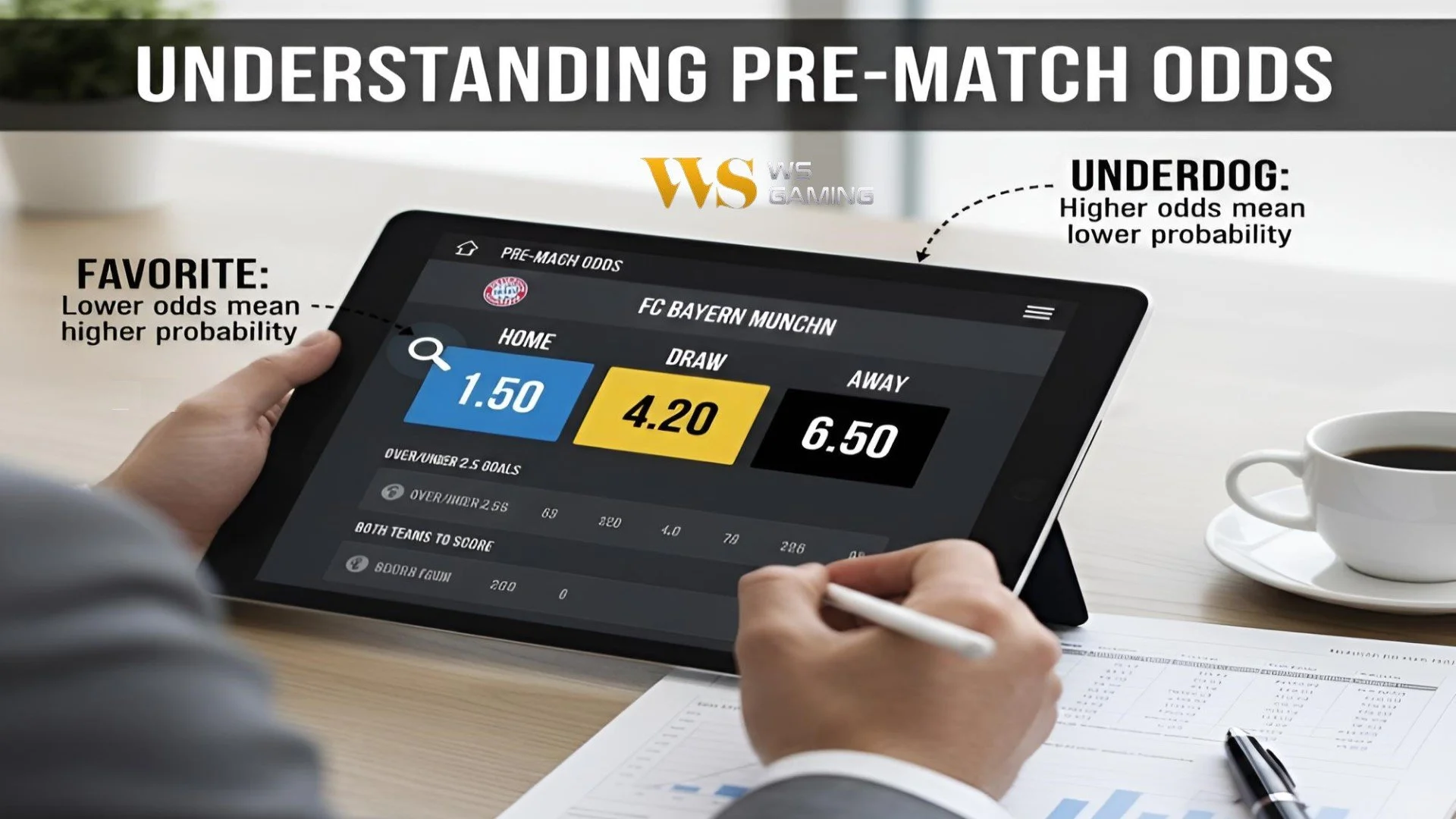
- Representing Implied Probability: The odds assigned to an outcome reflect the bookmakers assessment of how likely that outcome is to happen. A lower number of odds signifies a higher probability (the favorite), while a higher number signifies a lower probability (the underdog).
- Determining Payouts: The odds dictate the return a successful bettor will receive on their stake. This calculation typically includes the return of the original stake plus the profit.
The Bookmakers Edge The Juice (Vig)
It is a crucial, high semantic search point to understand that the odds offered by a bookmaker are not the true statistical probability of an event. Every sportsbook incorporates a small commission, known as the vigorish or vig (often called juice in American betting markets), into their odds. This mechanism ensures the bookmaker makes a profit regardless of the outcome, as long as balanced betting action is achieved.
For instance, if two outcomes have a true 50/50 chance (like a coin toss), the fair odds would be 2.0 (Decimal) or 1/1 (Fractional). However, a bookmaker might offer 1.91 (Decimal) or 10/11 (Fractional) on both sides. The difference between the fair odds (100 total probability) and the bookmakers wsgaming.com total quoted probability (which might be 105 or more) is the bookmaker margin, or the vig. Recognizing this margin is a key step in advanced sports betting strategy.
The Three Primary Odds Formats Explained
The way odds are presented can vary significantly depending on geographic region and personal preference. The three dominant formats are Decimal, Fractional, and American (Moneyline) odds.
A. Decimal Odds (European Odds)
Decimal odds are the most common format globally and are arguably the most straightforward to read and calculate.
- How They Work The decimal number represents the total return (stake plus profit) for every one unit wagered.
- Calculation:
- Total Payout = Stake multiplied by Decimal Odds
- Profit = Total Payout minus Stake
- Implied Probability = 1 divided by Decimal Odds
- Example:
- Odds of 3.50 10 Stake Total Payout = 10 multiplied by 3.50 = 35. Profit = 35 minus 10 = 25.
- Implied Probability: 1 divided by 3.50 is approximately 0.2857, or 28.57 percent.
B. Fractional Odds (British Odds)
Fractional odds are traditionally used in the UK and Ireland, especially for horse racing and football.
- How They Work They are expressed as a ratio (e.g., 5/1, read as five-to-one). The first number (numerator) is the profit you stand to win, and the second number (denominator) is the stake required to win that profit.
- Calculation:
- Profit = Stake multiplied by (Numerator divided by Denominator)
- Total Payout = Stake plus Profit
- Implied Probability = Denominator divided by (Numerator plus Denominator)
- Example:
- Odds of 7/2 20 Stake Profit = 20 multiplied by (7 divided by 2) = 70. Total Payout = 20 plus 70 = 90.
- Implied Probability: 2 divided by (7 plus 2) = 2/9 is approximately 0.2222, or 22.22 percent.
- Note: Odds of 1/1 are known as Evens, meaning a 1 profit for every 1 staked.
C. American Odds (Moneyline Odds)
American odds are predominantly used in the United States and are structured around a standard 100 wager. They use a minus sign ( – ) for the favorite and a plus sign ( + ) for the underdog.
- How They Work:
- Negative Odds (Favorite, e.g., -150) This number shows the amount you must wager to win a profit of 100.
- Positive Odds (Underdog, e.g., +200) This number shows the amount you would win as profit on a 100 wager.
- Calculation:
- For Negative Odds (Favorite):
- Profit = (100 divided by Odds) multiplied by Stake
- Implied Probability = Odds divided by (Odds plus 100)
- Example: -150. Wager 150 to win 100 profit. Probability: 150 divided by (150 plus 100) = 150/250 = 60 percent.
- For Positive Odds (Underdog):
- Profit = (Odds divided by 100) multiplied by Stake
- Implied Probability = 100 divided by (Odds plus 100)
- Example: +200. Wager 100 to win 200 profit. Probability: 100 divided by (200 plus 100) = 100/300 is approximately 33.33 percent.
- For Negative Odds (Favorite):
Many serious bettors and quantitative bettors utilize an odds calculator to instantly convert between these formats to ensure they are comparing apples to apples when shopping for the best price across different sportsbooks.
Understanding Different Bet Types and Their Odds
While the odds formats remain consistent, their application changes depending on the specific type of bet being placed. Understanding these betting markets is essential for a complete grasp of how do sports betting odds work.
Moneyline Bets
- Concept: A simple wager on which team or player will win the event outright, often the easiest betting odds to understand. The odds reflect the probability of victory.
- Example: Team A (-200) vs. Team B (+180). Team A is the clear favorite; you bet 200 to win 100 profit. Team B is the underdog; you bet 100 to win 180 profit.
Point Spread (Handicap) Betting
- Concept: This bet levels the playing field by setting a margin of victory (the point spread). The favorite must win by more than the spread, or the underdog must lose by less than the spread (or win outright). The odds on a spread bet are typically close to Evens or -110 (1.91 Decimal), reflecting a near 50/50 proposition after the handicap is applied.
- Example: Team A -6.5 vs. Team B +6.5. If you bet on Team A, they must win by 7 points or more. If they win by exactly 6 points, your bet loses. If the final score lands exactly on the spread number, it is called a push, and all stakes are returned.
Totals Betting (Over/Under)
- Concept: A wager on whether the combined final score of both teams will be Over or Under a specific number set by the bookmaker. Like spread bets, the odds for both the Over and Under are usually around -110 (1.91 Decimal).
- Example: Total Points: 45.5. Betting Over means you expect 46 points or more. Betting Under means you expect 45 points or less.
Parlays and Accumulators
- Concept: A single bet that combines two or more individual wagers (called legs). For the parlay to win, every single leg must be successful. The odds at the world of sportsbook betting real time odds is governed by mathematics and the constant flow of information. Whether you are a casual punter interested in simple moneyline betting or an advanced sharp bettor using complex models and Odds Feed Solutions to find the slightest edge, a deep understanding of how odds work is the foundation of your success.are calculated by multiplying the odds of each individual selection, leading to a much higher potential payout but also a significantly lower implied probability. This is a common high-risk, high-reward approach for bettors seeking a large return on a small stake.
Prop Bets (Proposition Bets)
- Concept: Wagers on specific events within a game that do not necessarily relate to the final outcome. Examples include Will Player X score a goal? or Which team will score first? The odds for prop bets are set based on the bookmakers specific assessment of the likelihood of that micro-event.
The Role of Live Data and Odds Feed Keywords
In the fast-paced world of in-play betting (or live betting), odds are not static; they fluctuate constantly based on real-time events. A goal scored, a player injured, or a major swing in momentum will immediately trigger a change in the live betting odds.
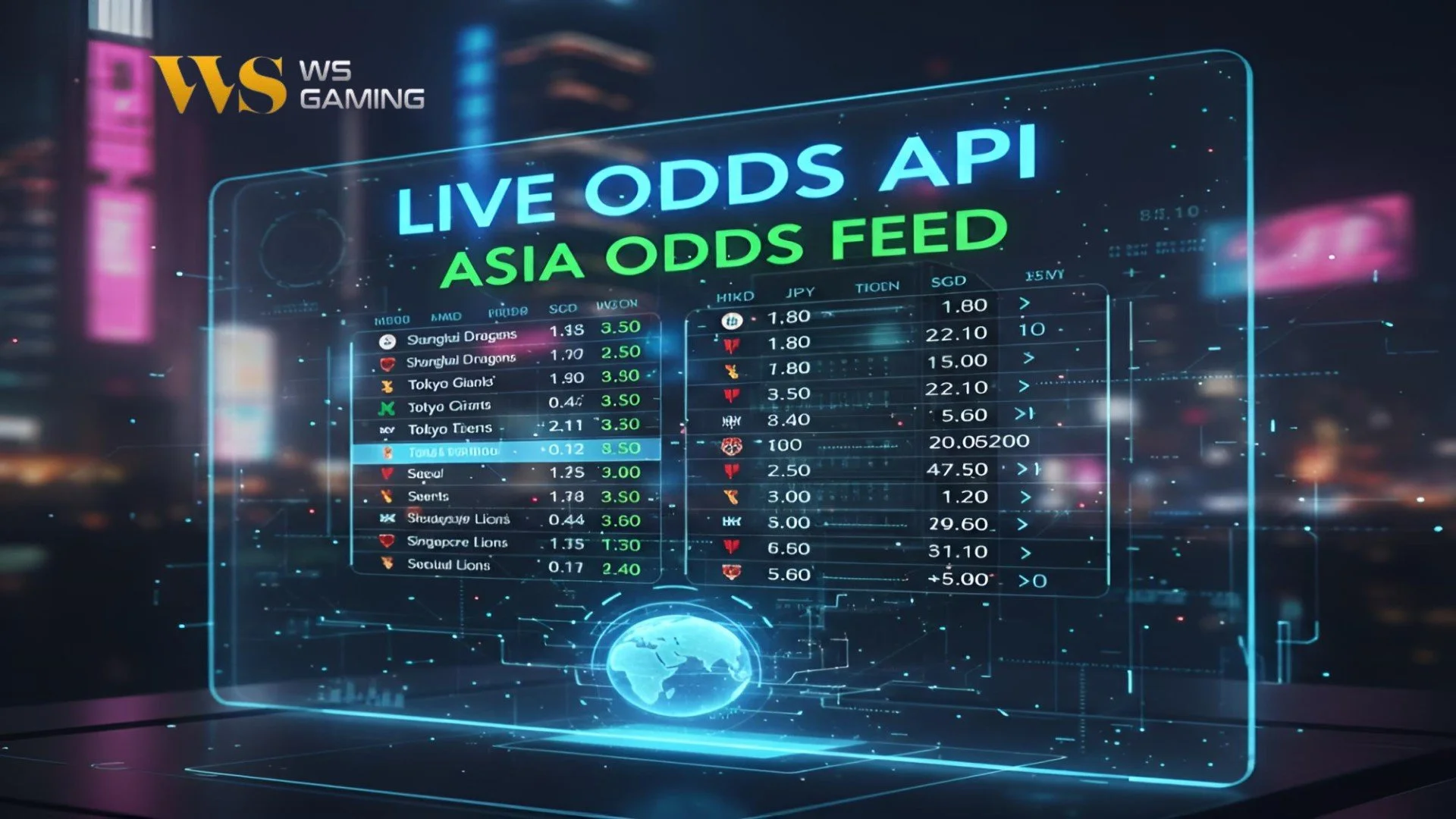
For both bookmakers and bettors, having access to instant, accurate, and reliable sports data is paramount. This is where the term Odds Feed becomes a high-intent keyword. An Odds Feed is a constant, real-time stream of data that delivers up-to-the-second odds and associated statistics from a sports data provider to a betting platform or to an advanced bettors software.
For any platform or operator looking to offer a competitive and dynamic betting experience, investing in robust Odds Feed Solutions is non-negotiable. These solutions ensure:
- Accuracy: Odds reflect the precise, current state of the game.
- Speed: Latency is minimal, allowing for immediate odds changes.
- Breadth: Coverage includes a vast array of betting markets across numerous sporting events globally.
- Efficiency: The automated nature of the Odds Feed allows bookmakers to manage risk and update millions of odds points simultaneously, covering everything from the main moneyline to obscure player props.
The speed and reliability of an Odds Feed directly impact the quality of the live betting experience. When a goal is scored, the odds for a home win, draw, and away win must update instantly to reflect the new state of play, ensuring the operators liability is correctly managed and providing users with accurate real-time odds.
Identifying Value and Developing a Betting Strategy
Understanding how to convert odds into implied probability is the first step; the second, and more advanced step, is using this knowledge to identify value bets.
Implied Probability vs. True Probability
A value bet exists when a bettor believes the bookmaker has mispriced the market–meaning the odds offered represent an implied probability that is lower than the bettors true perceived probability of the event occurring.
- Scenario: A bookmaker sets the odds for Team C to win at 4.00 (25 percent implied probability). A meticulous bettor, using expert analysis, team news, and past performance data, estimates the true probability of Team C winning is closer to 33.33 percent (Fair Odds: 3.00).
- Conclusion: Since the bettor believes the true probability is higher (33.33 percent) than the bookmakers implied probability (25 percent), the odds of 4.00 represent a positive expected value (+EV), making it a value wager. The key to success is consistently identifying and placing these positive expected value bets.
Bankroll Management and Betting Units
Even the most accurate expert prediction or the most astute identification of a value bet can be undermined by poor bankroll management. Responsible and strategic bettors use betting units (typically 1-5 percent of their total betting capital) to standardize their wagers, ensuring a single bad bet does not devastate their betting bankroll. The size of the unit staked is often correlated with the perceived edge or value in the odds–a higher confidence bet receives a larger unit stake.
Conclusion: The Path to Informed Sports Wagering
The world of sportsbook betting real time odds is governed by mathematics and the constant flow of information. Whether you are a casual punter interested in simple moneyline betting or an advanced sharp bettor using complex models and Odds Feed Solutions to find the slightest edge, a deep understanding of how odds work is the foundation of your success.
By mastering the formats–decimal, fractional, and moneyline–and consistently comparing the bookmakers implied probability against your own objective assessment, you move from simply gambling to engaging in informed, strategic sports wagering. Furthermore, recognizing the role of technology and real-time data, particularly the crucial function of a comprehensive Odds Feed for competitive and accurate pricing, highlights the modern imperative for speed and precision in this highly dynamic industry. Armed with this knowledge, you are better equipped to navigate the complex markets and seek out the elusive yet profitable value bets.
Frequently Asked Questions (FAQ)
* Decimal Odds (e.g., 2.50): Represent the total return (stake + profit) for a $1 wager.
* Fractional Odds (e.g., 5/2): Represent the profit-to-stake ratio (win $5 profit for every $2 staked).
* Moneyline/American Odds (e.g., -150 or +200): Negative indicates the amount to wager to win $100 profit; Positive indicates the profit won on a $100 wager. All three formats express the same probability and payout.
The vigorish (or “vig,” also called the “juice”) is the commission or fee that the bookmaker builds into the betting odds. It is the percentage that guarantees the sportsbook a profit margin, regardless of the outcome, by ensuring the combined implied probability of all outcomes exceeds 100%. Understanding the vig is key to finding value bets.
You can convert any odds format into a percentage probability:
* Decimal: $1 / Decimal Odds
* Fractional (A/B): B / (A + B)
* Moneyline (+C): 100 / (C + 100)
* Moneyline (-D): D / (D + 100)
The Odds Feed is a critical, high-intent term referring to a real-time data stream that delivers constantly updated odds, scores, and statistics from a sports data provider to betting platforms. Reliable Odds Feed Solutions are essential for bookmakers to manage risk and provide accurate, up-to-the-second live betting odds to their users, enabling a competitive in-play betting experience.
The core mathematical concept is Implied Probability. All betting odds formats (Decimal, Fractional, and Moneyline) are simply different ways of expressing the bookmaker’s calculated likelihood (probability) of a specific event occurring, which in turn determines the potential financial return or payout for a successful wager.
The Point Spread (or handicap) is designed to equalize the chances between a favorite and an underdog by creating a hypothetical margin of victory. The odds are typically set around -110 (or 1.91 in Decimal) because, after applying the spread, the bookmaker aims for the proposition to be close to a 50/50 probability, with the -110 line incorporating the necessary vigorish (juice) to ensure a profit regardless of which side receives the most betting action.
Bookmakers use a combination of expert analysis, statistical models, historical data, team news, weather conditions, and sophisticated algorithms to calculate the raw true probability for all potential outcomes. They then adjust these probabilities by incorporating their mandatory bookmaker margin (the vig) to create the final, publicly visible betting odds.
The total potential payout for a parlay (or accumulator) bet is calculated by multiplying the odds of all individual selections (legs) together. This multiplicative effect results in very high odds and a large potential payout. However, because every leg must win, the combined implied probability is significantly lower, making it a high-risk, lower-probability wager suitable for seeking a large return on a small stake.
Real-time Odds Feed Solutions are essential because in-play betting requires odds to instantly reflect the dynamic, minute-by-minute changes in a live sporting event (e.g., a goal, a penalty, a time-out). A fast, accurate Odds Feed minimizes latency, allowing bookmakers to manage their financial risk (liability) effectively and enabling bettors to access the most accurate live betting odds for timely betting decisions.